
Trade fair stand fire protection and permits: What exhibitors need to know

A trade fair booth can be visually stunning, technically sound, and within budget, yet still stall just before setup. The reason is often not the idea itself, but rather a missing document, a drawing submitted too late, or a requirement in the technical guidelines that only becomes apparent during construction.
This article shows you how to integrate fire safety, approvals, and technical requirements into your stand planning early on. It does not replace legal review or the trade fair organizer's specifications. The current technical guidelines and the exhibitor handbook of the respective trade fair are always authoritative. However, it will help you understand typical issues, better plan internal processes, and work more effectively with stand builders, project managers, and organizers.
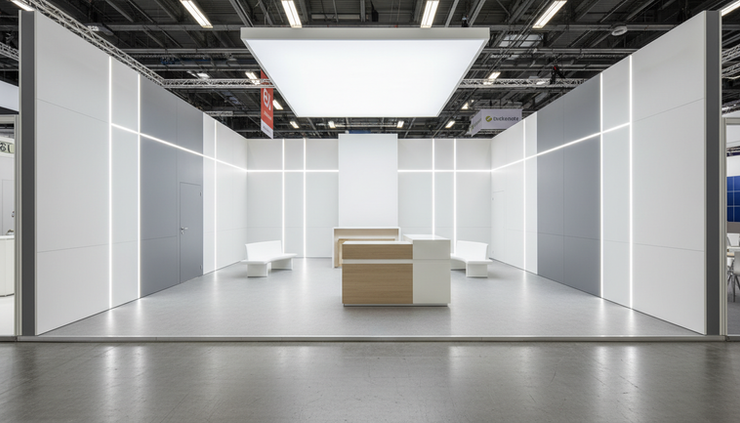
How to avoid risks regarding fire protection and permits - trade fair stand fire protection
Fire safety and permits may initially seem like an administrative matter. In practice, however, they influence many decisions in stand construction:
What materials are used?
How are ceilings, walls, exhibits and lighting planned?
Does a drawing need to be submitted in advance?
Are there any special designs that would trigger an additional inspection?
By what date must the documents be submitted to the trade fair company?
Those who only clarify these questions shortly before construction risk delays, changes on the construction site, or additional costs. It is better to consider the requirements as early as the concept phase, i.e., before the design, 3D visualization, and technical planning are finalized.
Especially when it comes to fire protection at trade fair stands, it's not just the individual material that matters. The crucial factor is the interplay between the stand's design, its use, visitor flow, technical equipment, and the specific requirements of the event.
First, understand why this topic is so important.
Exhibition halls are complex spaces. Many stands are set up simultaneously, and there are electrical installations, lighting, decorations, exhibits, storage areas, visitor flows, and escape routes. The rules are not intended to stifle design. They are meant to ensure a safe process for everyone involved.
This has three practical consequences for exhibitors.
Planning certainty increases.
If requirements are clarified early on, materials, designs and submission deadlines can be realistically planned.
Cost risks decrease.
Late changes to the exhibition stand can be expensive, especially if production has already begun or assembly teams are waiting on site.
The assembly process is running more smoothly.
Once drawings, documentation and questions have been clarified, the team can concentrate on assembly.
This applies to small system stands as well as individual brand presentations. The more complex the stand, the more important early coordination becomes.
Check where the rules for your exhibition stand come from.
The central basis consists of the technical guidelines for trade fairs and the exhibitor handbook for the respective event. These documents are provided by trade fair companies or organizers and can vary depending on the location, hall, event, and stand size.
Typical sources include:
Technical guidelines of the trade fair company
Exhibitor handbook for the event
Order portals or service documents of the trade fair
Guidelines for stand design and stand boundaries
Forms for permits, connections and submissions
Information on setup times, dismantling times and access routes
Important: Always use the latest version of the documents for the specific trade fair. Old documents from the previous year may be outdated. Experiences from other events cannot be automatically transferred.
If you are working with an exhibition stand builder, they should request the documents early on or review them with you. However, the responsibility for complying with the regulations does not rest with a single person. It is a collaborative effort involving the exhibitor, the stand builder, the project manager, the event organizer, and potentially other relevant departments.
Address typical fire protection issues early in the design process.
Many fire safety-related issues arise during the design phase. Therefore, the design planning should not be separate from the technical requirements. A good exhibition stand design considers spatial impact, visitor flow, and safety together.
Pay attention to the fire behavior of materials.
Materials at the exhibition stand must be appropriate for the event and comply with the specifications. This includes, for example:
Wall coverings
Floor coverings
Fabrics and curtains
decorations
Ceiling suspensions
Graphics, banners and costumes
Furniture and custom components
Depending on the trade fair, proof of fire behavior may be required. This often includes manufacturer specifications, test certificates, or classifications. The exact documentation required can be found in the current trade fair documents.
It's not just about whether a material looks good. It also has to be suitable for its intended use at the trade fair.
Plan open pathways and sensible standing areas.
The layout of the booth can also be a safety issue. Narrow passageways, unclear walkways, or cluttered areas make orientation and operations difficult. A clear floor plan helps visitors, staff, and assembly teams.
These points can be easily checked in early 3D planning:
How do visitors move through the booth?
Where are the exhibits located?
Which areas will remain free?
Where will the technology, storage, and catering be located?
Are there any elements above head height or enclosed areas?
The 3D visualization here is more than just a visual preview. It makes potential conflicts visible before materials are ordered or construction begins.

Check when drawings need to be submitted.
Not every exhibition stand requires the same level of inspection. For simple stands, standardized specifications and orders are often sufficient. For special shapes, larger constructions, or extensive technical installations, a drawing may be required in advance for approval or inspection.
A stand construction permit may be relevant for certain trade fairs, for example, if the stand has special structural features. These generally include:
special constructions
closed or partially closed ceiling areas
elevated levels or complex structures
large exhibits or heavy components
Special solutions for lighting or suspensions
Components that go beyond standard solutions
Deliberately without precise limits: Whether a submission is required depends on the current regulations of the respective trade fair. Making general statements about heights, areas, or deadlines would be risky, as these can vary depending on the event.
If you are unsure, the project team should clarify early on which documents are needed and who will prepare them. You can find more information about our services under Stand Construction .
Submit documents often weeks before construction begins.
The most important time factor is not the setup itself, but the lead time. Many documents often need to be submitted weeks in advance . This applies particularly to booths that need to be reviewed or approved.
A practical process looks like this:
Please review the trade fair documents immediately after booking your stand.
Check the technical guidelines, exhibitor manual and relevant forms.
Start the design process with technical guidelines.
Provide the design team with early information regarding floor space, hall, construction method and known specifications.
Review the draft before finalizing it.
Clarify whether specific components, materials, or designs could trigger a submission.
Gather evidence alongside the planning process.
Don't wait until production if material verification or technical specifications are foreseeably needed.
Submit documents with extra time.
It's normal for the trade fair organizers to ask questions. Please allow time for adjustments.
Keep an eye on the assembly and installation process.
The approved plan should also be feasible on-site. This includes logistics, team planning, and technical connections.
Especially for nationwide trade fair projects, meticulous scheduling pays off. Those who regularly plan events at major exhibition centers, for example, benefit from established processes. You can find more information on regional implementation under Trade Fair Construction Düsseldorf .
Compile frequently needed documents.
The required documents depend on the trade fair, the booth, and the construction method. The following overview shows typical documents that may frequently play a role in connection with fire protection, approvals, and technical planning.
document | What it is often used for | Whoever usually prepares it |
Floor plan or drawing | Representation of floor space, walls, exhibits and walkways | Exhibition stand builder or planning team |
Views or 3D visualization | Examination of height, structure and design in the room | Design or planning team |
Material evidence | Information on the fire behavior of the materials used | Suppliers, exhibition stand builders, manufacturers |
Construction details | Explanation of special components or special solutions | Technical planning |
Information on electrical and lighting | Coordination of connections, lights and consumers | Specialist planning or exhibition stand construction |
Trade fair forms | Official registration, review, or ordering of services | Exhibitor, stand builder or project manager |
This list is not a binding requirement. It only shows which topics are typically prepared. The exhibitor handbook remains authoritative.

Use the project management as a coordinating interface.
Project management in exhibition stand construction is particularly important because a lot of information comes together. It coordinates deadlines, interfaces, and queries between exhibitors, design, technical planning, production, assembly, and the exhibition company.
It is important to make a clear distinction: The project management team is neither a legal authority nor a permitting body . It can categorize requirements, monitor deadlines, initiate documentation, and facilitate coordination. The binding assessment rests with the responsible departments of the trade fair or with the designated review bodies.
In practice, an experienced project manager provides support with tasks including:
Obtain and review current trade fair documents
Clarify internal tasks and responsibilities
Include submission deadlines in the schedule.
Any questions should be directed to the appropriate contact person.
Combining design, technical planning and assembly
Document changes and communicate them to all involved parties.
This reduces friction, especially when multiple trades are involved or the stand is custom-built.
Combine design, 3D and full-service assembly
Fire safety and permits cannot be addressed in isolation. A design may be aesthetically compelling, but it must also be feasible to build, transport, assemble, and operate.
A full-service approach is helpful because planning and implementation work more closely together. When design, stand construction , production, and assembly are coordinated early on, the risk of surprises decreases.
It starts with simple questions:
Does the chosen material meet the trade fair specifications?
Is the planned design suitable for on-site assembly?
Does a drawing need to be submitted?
Are the connections, lights, and exhibits realistically placed?
Can the assembly teams implement the approved plan cleanly?
Have packaging, transport, and assembly sequence been taken into account?
Early 3D planning is extremely valuable. It not only visualizes the final effect but also reveals technical conflicts. This allows critical points to be adjusted before production.
Use this checklist before final approval.
Use the following list as a working basis. It does not replace the trade fair's specifications, but it will help with internal preparation.
The latest exhibitor handbook is available.
The technical guidelines for the specific trade fair have been checked.
Stand area, hall and stand number are clearly known.
The design was reviewed with regard to safety and visitor flow.
Materials were assessed in advance with regard to fire behavior.
Possible special designs have been identified.
The need for a trade fair stand permit was reviewed based on the trade fair documents.
Drawings, views or 3D representations are prepared.
Material documentation has been requested or is available.
Electrical systems, lighting and connections are included in the planning.
Submission deadlines are listed in the project plan.
Responsibilities between exhibitor, stand builder and project management have been clarified.
Buffer time is planned for queries and adjustments.
Assembly planning follows the approved design.
If several issues remain unresolved, final production approval should not yet be given. Changes are usually much easier to make during the planning phase than on the trade fair floor.
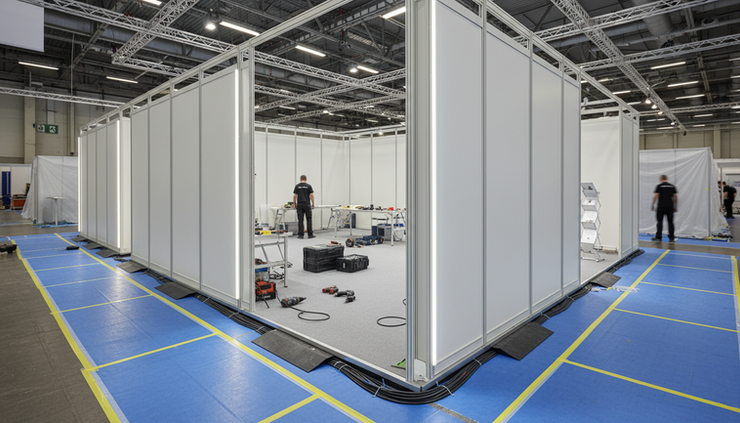
Frequently asked questions about fire protection and permits in trade fair construction
Who decides whether an exhibition stand needs to be approved?
This is determined by the current regulations of the respective trade fair company or organizer. In many cases, the technical guidelines and exhibitor handbook provide information on when documents must be submitted. The stand builder can offer assistance, but is not the approving authority.
What role does the fire behavior of materials play?
Materials may require documentation depending on their intended use. This applies, for example, to fabrics, floor coverings, wall coverings, or decorations. The specific documentation required will be detailed in the documents for the respective trade fair.
When should I start the exam?
Ideally, submit your requirements immediately after booking your booth and before final design approval. Many submissions are required weeks before setup. The earlier the requirements are known, the better the design, production, and assembly can be planned.
Is a 3D visualization sufficient for approval?
A 3D visualization is very helpful, but it doesn't automatically replace technical drawings or required documentation. Which representations are accepted depends on the trade fair and the specific booth.
Can CA Messebau handle the entire coordination process?
CA Messebau can support the planning, coordination, and preparation of relevant project documents. The binding review and approval are carried out by the responsible departments of the trade fair or the designated contact persons.
Don't leave fire protection and permits until the end of the planning process.
Fire safety, technical guidelines, and potential approvals should be considered early in the trade fair planning process. Checking them only shortly before setup risks delays and unnecessary corrections. Integrating them from the outset with design, 3D planning, stand construction, and assembly creates greater security for the entire project.
CA Messebau supports you in structured preparation, from the initial idea and technical planning to full-service assembly. If you are planning a specific trade fair project, you can request a consultation or a quote for your exhibition stand here.
Meta
SEO Title
Trade fair stand fire protection & permits: What exhibitors need to know | CA Messebau
Meta Description
Fire safety, technical guidelines, and permits in exhibition stand construction explained in an easy-to-understand way. Learn which documents, deadlines, and interfaces exhibitors should clarify early on.


Comments